
Saucony Flat Feet
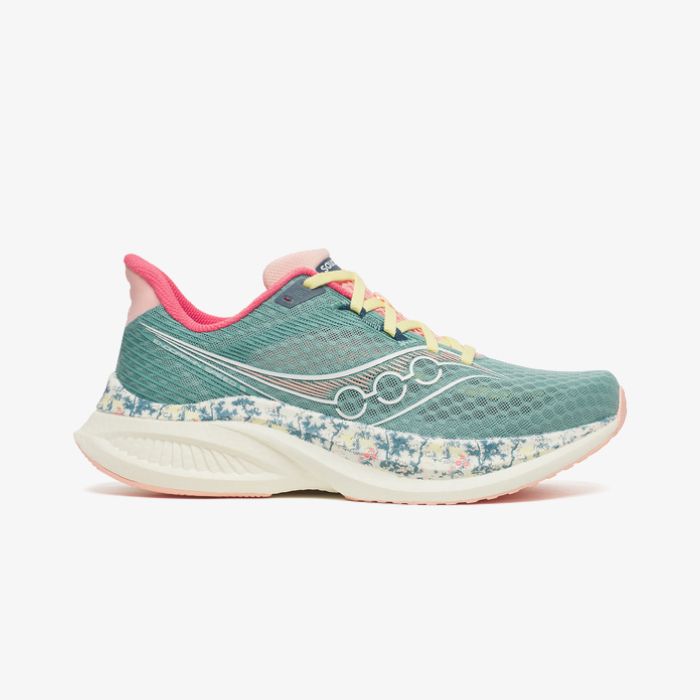 PWRRUN PB technology with 88% energy return">
Flat feet — or low arches — affect roughly one in four adults in the UK. When your arch collapses on impact, your ankle rolls inward (overpronation), which can cause discomfort from the foot up through the knee and hip. The right shoe won't fix your biomechanics, but it can significantly reduce that strain during walking and running.
Saucony has built some of the most medically-informed stability shoes on the market. As authorised stockists, we carry the key models and fit them daily. This guide covers the technology, the specific models, and how to choose.
1 | What Flat Feet Actually Need in a Running Shoe
Flat feet collapse the medial arch on impact — the inside of the foot rolls downward and inward. This is called overpronation. Over long distances or repeated impact, it can stress the plantar fascia, ankles, shins, and knees.
A stability shoe addresses this in two ways: structural medial support (stopping excessive inward roll) and firm, controlled cushioning that doesn't let the foot sink unevenly.
What to Look For
- Medial post or guide rail — firmer foam on the inner side of the midsole to resist inward collapse
- Wider base — broader contact area improves inherent stability
- Structured heel counter — wraps the heel to reduce lateral wobble
- Moderate stack height — maximalist shoes can actually increase instability for overpronators
- Responsive but firm midsole — too soft = too much sink = more roll
Neutral shoes are not designed for overpronators. They lack the medial support needed to counteract inward collapse. For flat feet, a dedicated stability shoe makes a measurable difference — Saucony's Guide and Tempus are two of the best examples in the market.
2 | Saucony Stability Technology Explained
Saucony uses two distinct systems to address overpronation. Understanding them helps you match the right shoe to your severity of pronation.
PWRRUN+ Foam
Saucony's premium midsole compound. 28% lighter than standard EVA foam with significantly higher energy return. Found in the Tempus — provides plush cushioning that doesn't sacrifice responsiveness or bottom-out under heavier impact.
PWRRUN Foam
The Guide's workhorse midsole. Firmer and more durable than PWRRUN+, tuned for everyday training volume. Provides consistent cushioning without the softness that can exacerbate pronation.
PWRRUN PB (Propel Bed)
The most responsive foam in the range — used in racing shoes. Not found in stability models, but referenced here so you understand where the Tempus and Guide sit in the cushioning hierarchy.
FORMFIT
Saucony's three-zone construction system: the sockliner, upper, and frame all contour independently to your foot shape. For flat feet, this means the shoe adapts to your arch profile rather than forcing your foot into a fixed shape.
Guide Rails vs Medial Posts
Saucony uses a guide rail system (firmer foam on the medial side of the midsole) rather than a traditional hard plastic medial post. This provides a more gradual correction — enough to reduce overpronation without overcorrecting, which can cause its own problems.
3 | The Saucony Tempus — Best Stability Shoe for Flat Feet
The Tempus is Saucony's premium stability shoe and the standout choice for flat-footed runners who want cushioning and control without sacrificing energy return. It uses a dual-density midsole — softer PWRRUN+ on the lateral (outer) side, firmer PWRRUN on the medial (inner) side. This creates natural guidance without forcing a corrective motion.
Tempus Key Specs
- Midsole: Dual-density PWRRUN+ (lateral) and PWRRUN (medial)
- Drop: 8mm heel-to-toe offset
- Stack height: 36mm heel / 28mm forefoot
- Weight: Approx. 260g (Men's UK 9)
- Upper: engineered mesh with a structured internal frame
- Best for: moderate to severe overpronation, daily training and walking
The Tempus is designed for runners who have previously been told to use motion-control shoes but found them too stiff. The dual-density approach provides correction without rigidity — it guides rather than forces. Most flat-footed wearers report the transition feeling natural rather than corrective.
Who the Tempus Suits
- Moderate to severe overpronators
- Runners who find neutral shoes uncomfortable after 5km+
- Walkers covering 8,000–15,000 steps per day on hard surfaces
- Those coming from motion-control shoes who want more cushioning
- Heavier runners who need medial support alongside cushioning
4 | The Saucony Guide — Everyday Stability
Now in its 17th iteration, the Guide is Saucony's longest-running stability shoe and one of the most recommended by podiatrists and physios in the UK. It's firmer than the Tempus, built for runners who prefer a more traditional, ground-connected feel over plush cushioning.
Guide 17 Key Specs
- Midsole: PWRRUN foam with medial stability frame
- Drop: 8mm heel-to-toe offset
- Stack height: 33mm heel / 25mm forefoot
- Weight: Approx. 280g (Men's UK 9)
- Upper: breathable engineered mesh, structured toe box
- Best for: mild to moderate overpronation, high mileage training
The Guide has been refined over 17 versions to offer what podiatrists describe as "inherent stability" — a design that doesn't over-rely on a single medial post but distributes correction across the whole platform. For mild overpronators or those who want stability for walking rather than running, the Guide is often the better-fitting choice.
Who the Guide Suits
- Mild to moderate overpronators
- Runners who want more ground feedback than the Tempus provides
- High-mileage training (the firmer foam lasts longer under repeated impact)
- Those coming from Brooks Adrenaline GTS or ASICS GT-2000 and wanting to try Saucony
- Walkers who want a structured, supportive everyday shoe
5 | Tempus vs Guide: Which Should You Choose?
Choose the Tempus if...
You want maximum cushioning alongside stability. You have moderate to severe overpronation. You find the Guide too firm. You're coming from maximalist neutral shoes and need to add stability without giving up cushioning.
Choose the Guide if...
You prefer a more traditional, firmer feel underfoot. You're a high-mileage runner who needs durability. You have mild overpronation and want support without heavy medial correction. You're on a tighter budget.
A Note on Orthotics
Both the Tempus and Guide have removable insoles and generous internal volume, making them compatible with custom orthotics. If you use prescribed orthotics, the Guide's slightly roomier last tends to accommodate them more comfortably. We recommend trying in-store at OD's — bring your orthotics if you have them.
Shop Saucony at OD's Designer Clothing
Browse our full range of Saucony stability and running shoes — available in-store at 44 Barrow Street, St Helens, and online.


6 | Frequently Asked Questions
Are Saucony shoes good for flat feet?
Yes — specifically the stability models. The Saucony Tempus and Guide are both designed for overpronators with a medial support system built into the midsole. They are regularly recommended by podiatrists and physiotherapists for mild to severe flat feet. Neutral Saucony models (like the Kinvara or Ride) are not designed for overpronation and should be avoided if you have significant flat feet.
What is the difference between the Saucony Tempus and Guide for flat feet?
The Tempus uses a dual-density PWRRUN+ midsole — softer laterally, firmer medially — making it the more cushioned option. It suits moderate to severe overpronators who want plush protection alongside stability. The Guide uses a firmer PWRRUN foam throughout, offering more ground feel and durability — better for mild overpronators and high-mileage runners who prefer a traditional stability feel.
Should I size up in Saucony shoes if I have flat feet?
Generally no. Saucony runs true to size for most foot types. However, flat-footed runners sometimes experience a wider forefoot splay on impact — if you find the toe box tight at your normal size, try half a size up. The Guide has a slightly more generous toe box than the Tempus. We recommend fitting in-store where possible.
Can I use Saucony stability shoes for walking as well as running?
Absolutely. The Guide and Tempus are both excellent walking shoes for flat-footed individuals. The medial support is beneficial for overpronators regardless of pace. Many customers with flat feet use them exclusively for walking rather than running — particularly those who cover significant daily steps on hard floors or pavement.